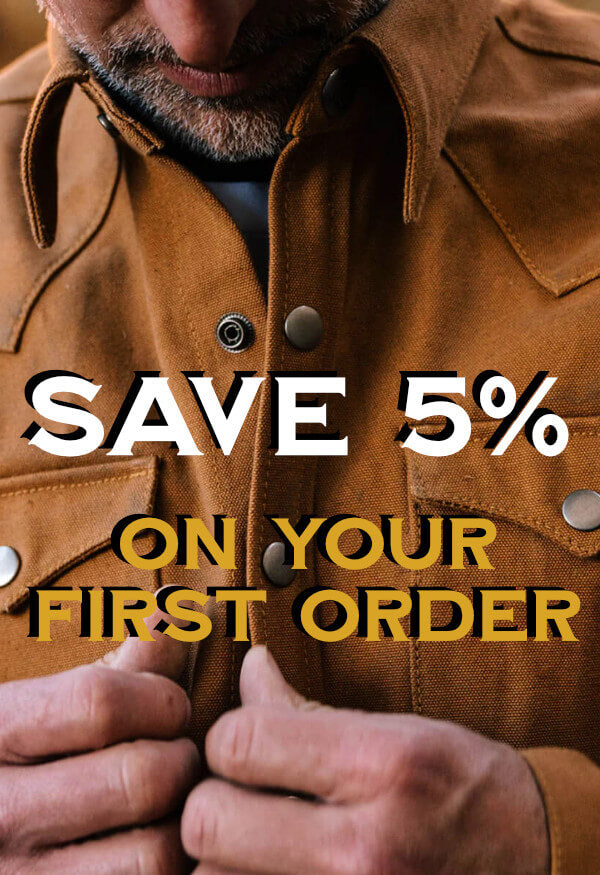




There was a time when putting on a shirt wasn't considered dressing up. It was simply getting dressed.
Men wore shirts to work, to the pub, to travel, to walk the dog, to fix things, to ride motorcycles and, occasionally, to sit behind a desk. The shirt wasn't reserved for weddings and job interviews. It was an everyday garment.
We think there is something to be said for that.
As we head into autumn, the shirt comes into its own. Heavier cotton, flannel, denim, corduroy and overshirts provide warmth without immediately reaching for a coat, and few garments are easier to layer.
But there is another reason we like a good shirt.
A shirt makes a man look better dressed without necessarily making him look dressed up.
And when that shirt takes its inspiration from traditional workwear, it can be every bit as practical as the T-shirt or sweatshirt it replaces.
Why Wear a Shirt?
The simple answer is that a good shirt works almost anywhere.
Wear one buttoned with jeans and boots and you're ready to go out. Leave it open over a T-shirt and it becomes a lightweight outer layer. Roll the sleeves up when you're working. Add a gilet when it gets colder. Put a waxed jacket over it when the weather turns properly British.
It doesn't need to be formal.
In fact, themen's workwear shirts we tend to favour at Natural Man are about as far removed from the traditional office shirt as you can get.
They come from a different tradition entirely.
These are shirts influenced by men who worked outdoors, in workshops, on farms, on railways and in forests. Clothes had to allow movement, withstand hard use and provide somewhere useful to put things.
What Is a Workwear Shirt?
Look closely at a traditional work shirt and most of the details are there for a reason.
Chest pockets carried tools and pencils. Heavier fabrics resisted abrasion. Reinforced seams and elbows dealt with repeated wear. Roomier cuts allowed a man to move. Flannel provided warmth. Denim and twill offered durability.
Even details that we now think of as styling often started with a practical purpose.
That is one of the reasonsheritage workwear has lasted while countless fashion trends have come and gone. Good design tends to survive.
Today's best workwear-inspired shirts retain much of that character but don't require you to spend your day felling trees or repairing a railway.
Wear them because they work — and because they look good.
Filson Shirts: Born in the American Northwest
Few brands have a more legitimate claim to workwear heritage thanFilson.
Founded in Seattle in 1897, Filson originally supplied clothing and equipment to men heading north during the Klondike Gold Rush. The company subsequently became closely associated with foresters, outdoorsmen, hunters, ranchers and others who required clothing capable of standing up to demanding conditions.
That heritage still runs through its shirts.
The Filson Alaskan Guide Shirt
TheFilson Alaskan Guide Shirt is a particularly good example.
First introduced in 1996, the Alaskan Guide has become the foundation for much of Filson's flannel shirting. The original uses densely woven 8oz cotton flannel, brushed for warmth and comfort, with a relaxed fit and a centre-back pleat to provide freedom of movement.
It's a shirt designed to be used.
And that basic philosophy carries across many of theFilson shirts we stock today. Different fabrics, weights and designs might appear from season to season, but the DNA remains recognisable: practical cuts, substantial materials and clothing intended for the outdoors rather than the boardroom.
Put one on with a pair of jeans and decent boots and very little else needs thinking about.
That's good menswear.
Iron & Resin: Blue-Collar California Workwear
Iron & Resin approaches the work shirt from a slightly different direction.
Born in Ventura, California, the brand draws heavily on motorcycles, surfing, workshops, Western clothing and traditional American blue-collar workwear.
The result is clothing that feels equally at home beside a motorcycle, around a campfire or at the bar.
And shirts form a big part of it.
Denim, Flannel and Corduroy
Iron & Resin shirts tend to use the sort of materials that become more interesting rather than less interesting as they're worn.
Thinkindigo denim shirts, heavyweight cotton flannels and corduroy.
Our recently arrivedJimson Shirt, for example, uses 100% cotton indigo denim with a Western yoke, snap front, pointed chest pockets and contrast stitching. It's unmistakably influenced by traditional Western workwear.
Then there are shirts such as theKlamath Jacquard Flannel, with heavyweight cotton, double and triple-needle seams and a substantial construction designed for years of wear.
These aren't delicate shirts.
They are clothes you can live in.
And that's really the attraction. Wear them hard, wash them, let the denim fade and the fabric soften. Six months down the line, the shirt will probably look better than when you bought it.
&SONS: British Heritage Workwear Reimagined
Then we come closer to home.
British brand&SONS takes inspiration from traditional workwear and combines it with a more contemporary cut and attention to detail.
The brand itself describes its original Heritage Collection as drawing on both British and American workwear, creating modern garments from styles that have existed for generations.
That influence can be seen throughout the shirts.
The Work Shirt Made for Modern Life
The&SONS Sunday Shirt is a good illustration.
Its roots are firmly in traditional workwear, but today it is equally suited to lunch at the pub, a day in town or worn open over a T-shirt. Details such as laid-on chest pockets, reinforced elbows and practical construction give it character without turning it into costume.
Other &SONS designs go further into the workwear archive.
Hickory stripe, heavy flannel, denim, chamois-style cloth, reinforced elbows, pencil pockets and substantial stitching all make appearances across the range.
The point isn't to dress like a factory worker from 1937.
It's to take what was good about those clothes —durability, practicality, strong materials and purposeful design — and make it relevant now.
A Shirt Just Makes You Look Better
There is also something more straightforward at work here.
A man generally looks like he's made a little more effort when he's wearing a shirt.
Nottoo much effort. That's important.
We're not suggesting everyone starts ironing a white Oxford before walking the dog.
A denim shirt worn open over a T-shirt, a checked flannel with the sleeves rolled up or a heavyweight work shirt with jeans is still casual. But the collar, structure and texture give an outfit more shape.
You can wear essentially the same jeans and boots you would have worn with a sweatshirt and look considerably more put together simply by changing what you're wearing on top.
That's useful.
Especially for men who aren't particularly interested in "fashion".
How to Wear a Men's Workwear Shirt
The good news is that you don't need many rules.
Jeans, Boots, Shirt
Probably the easiest combination in menswear.
A work shirt, good denim and a pair of boots will take you through most situations that don't require a suit.
Red Wing boots, selvedge or heavyweight denim and a Filson, Iron & Resin or &SONS shirt make particularly natural companions.
Wear It Open Over a T-Shirt
During early autumn, use a heavier shirt almost like a jacket.
Leave it unbuttoned over a plain cotton T-shirt with jeans or work trousers. When the temperature drops, button it up.
Simple.
Layer It Properly
This is whereautumn workwear really earns its keep.
T-shirt or merino base layer. Work shirt. Wool gilet or overshirt. Waxed jacket.
Add or remove layers as the weather dictates.
Rather than relying on one enormous winter coat, you're building warmth from natural, breathable layers — something that fits very naturally with the way we choose clothing at Natural Man.
Flannel Shirts for Autumn
There is a reason flannel returns every autumn.
Good cotton flannel provides warmth without the bulk of knitwear, breathes well and works brilliantly as part of a layered outfit.
Filson has used its Alaskan Guide Shirt for decades as a cold-weather working shirt, and its tightly woven construction was designed to provide warmth and durability while still allowing movement.
It also looks right at this time of year.
Checks, earthy colours, denim, corduroy, heavyweight cotton and boots all start making sense again as the evenings draw in.
Which suits us just fine.
Buy Better Shirts. Wear Them More.
At Natural Man, we've never been particularly interested in clothes designed to be worn for a season and discarded.
We prefer things that improve through use.
A goodmen's workwear shirt should be something you pull out of the wardrobe repeatedly. It should work with clothing you already own. It should be capable of taking a bit of punishment. And, ideally, it should look better after a few years than it did when it was new.
That's why brands such asFilson, Iron & Resin and &SONS make so much sense to us.
Different histories. Different interpretations.
Same basic idea.
Make a proper shirt. Make it from good materials. Make it useful. And make it to be worn.
New Men's Shirts for Autumn at Natural Man
With autumn arriving, we've added plenty of new season shirts fromFilson, Iron & Resin, &SONS and other heritage and outdoor brands.
From heavyweight flannel and indigo denim to corduroy and traditional work shirts, there are options for wearing now and layering right through autumn and winter.
Take a look at the latestmen's shirts online at Natural Man, or come into the shop and try them on.
Because whatever you're doing, there's a good chance you'll look better doing it in a proper shirt.